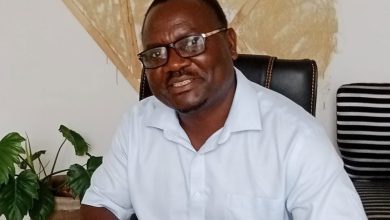
As Malawians count down to the September 16 2025 General Elections, fears of political violence are growing, with armed thugs disrupting demonstrations in Lilongwe. This casts a troubling shadow over the country’s democracy, including tolerance, as some political groups are using violence to protect their grip on power and traditional strongholds. Our Staff Reporter ALLAN CHIRWA speaks to Centre for Human Rights and Rehabilitation (CHRR) executive director Michael Kaiyatsa on the next steps. Excerpts:

Q; Why are incidents of political violence on the rise in the run-up to the 2025 General Elections?
A: As we approach the decisive elections, there is intensified competition and increased polarisation. As the stakes get higher, political groups are increasingly using violence to gain or maintain power. Additionally, impunity for past incidents and weak law enforcement have created an environment where perpetrators feel emboldened, knowing they are unlikely to face serious consequences. Recent incidents of political violence, coupled with the lack of accountability for those responsible, are only deepening the cycle of impunity.
Q: Is violence an unavoidable feature of Malawi’s young democracy?
A: No, violence is not unavoidable in any democracy. While Malawi is still building its democratic institutions, violence results from weak institutions, political manipulation and unaddressed grievances. Perpetrators are seldom held to account for their criminal actions. With stronger governance, better law enforcement and more accountability, we can reduce violence. It’s about building a political culture where disputes are resolved peacefully and through democratic means.
Q: How do you weigh the contributions of selfish politicians, economic disparities, and social media on the escalation of political violence in the country?
A; Politicians often fuel violence by using divisive rhetoric and exploiting economic disparities to rally support.
Frustration over poverty and inequality makes people, especially the youth, more vulnerable to manipulation.
Meanwhile, social media amplifies this division by spreading misinformation, hate speech, and inflammatory content that fuels anger and leads to violence. Together, these factors create a volatile mix that accelerates political violence, making it harder to foster peace and stability.
Q: We have seen images from Lilongwe where police officers either looked on indifferently or tear-gassed people exercising their right to demonstrate peacefully, leaving armed thugs to disrupt the mass protests with impunity. How do you rate the police officers’ professionalism in handling politically charged situations ahead of the 2025 polls?
A: The Malawi Police Service has faced criticism for being partisan at times, which undermines public trust in its ability to handle politically charged situations impartially. While some officers act professionally, the police service as a whole needs better training, accountability and a stronger commitment to political neutrality. Without these improvements, political violence will continue to be poorly managed, and public trust in the police will remain low.
Q: What strategies have proven effective in reducing political violence in the country?
A:The most effective strategies include community dialogue to bridge divides, strong voter education to promote peaceful elections, and accountability for those inciting violence.
An independent electoral body and a neutral police force are also critical for preventing violence. When people trust the system, they are less likely to resort to violence.
Q: What initiatives is CHRR undertaking to prevent political violence and foster peace in local communities, and how do these efforts support democratic integrity?
A: CHRR is actively working to prevent political violence by educating communities on the importance of peaceful elections through targeted civic education programmes.
We are also facilitating dialogue between rival political groups to build understanding and reduce tensions.
By advocating for accountability and supporting victims of political violence, our aim is to ensure that the democratic process remains free from fear and intimidation, and that people are able to exercise their right to participate in the electoral process without fear of violence or coercion.